FestivalsSeptember 18, 20268 min read
Meskel in Ethiopia: history, traditions and how to experience it
The great Demera bonfire, yellow Meskel daisies and thousands of worshippers in white: a guide to one of Ethiopia’s most important festivals.

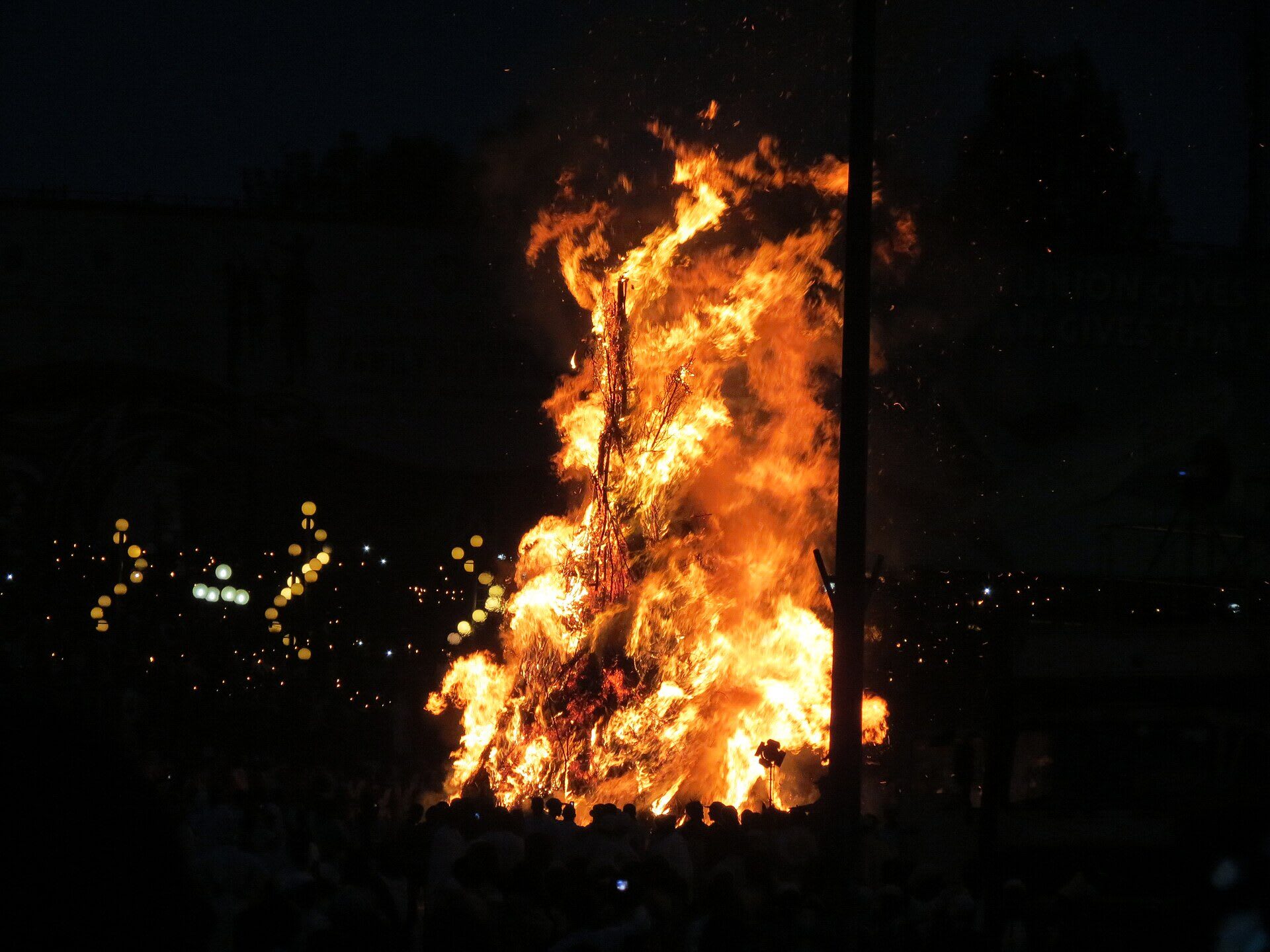
Meskel is one of the most important religious and cultural festivals in Ethiopia. Celebrated every September, it commemorates the finding of the True Cross on which Christ was crucified, and is famous for the spectacular Demera bonfire, colourful processions, traditional songs and large community gatherings. In 2013 UNESCO inscribed it on the Representative List of the Intangible Cultural Heritage of Humanity, recognising its role in social unity and reconciliation.
Meskel means “cross” in Amharic and Ge’ez. According to Ethiopian tradition, Empress Helena, known in Ethiopia as Eleni, mother of Constantine the Great, discovered the True Cross after a revelation: she lit a bonfire, and its smoke showed her where the cross lay buried. Ethiopians believe a fragment was later brought to the country and rests at the mountain monastery of Gishen Mariam.
The festival begins on the eve of Meskel, 26 September (27 in leap years). Tall wooden poles, branches and grass are gathered into a conical Demera and decorated with yellow Meskel flowers: the adey abeba daisies that bloom across the highlands as the rains end. Priests, deacons, Sunday-school choirs and worshippers gather around it for prayers, hymns and chanting, and as evening falls the Demera is set alight. The direction in which the burning pole falls is said to foretell the year ahead.
The largest celebration takes place in Meskel Square in Addis Ababa, where thousands of people in traditional white clothing surround the fire. Women wear the habesha kemis with a white netela shawl; clergy appear in richly coloured ceremonial robes. Smaller Demeras are lit in towns and villages across the country, from Gondar and Axum to Lalibela.
Meskel is also a time of homecoming. Families gather, share injera and festive dishes, resolve disagreements and strengthen ties, which is why experiencing it can offer a deeper understanding of Ethiopian culture than any monument.
A few tips if you plan to attend: book accommodation early, as the festival is a national holiday; confirm the exact date for your year of travel; arrive at Meskel Square early to find a good vantage point; dress modestly; and ask before photographing priests, worshippers or children. Above all, remember that this is a religious celebration, and follow the guidance of organisers and your guide.
A Meskel journey combines beautifully with Ethiopia’s historic north or with the start of the dry season in the south. Contact us to build an itinerary around the festival.
Written by Zelalem, travel writer. Questions about any of the above are always welcome, write to us.
In This Article
Tours that visit Meskel (Finding of the True Cross)
More From The Travel Journal
Also worth your time

Discover Ethiopia. Experience the Extraordinary!
Ready to see it for yourself?
Every essay here comes out of a journey we designed for someone. Tell us what you want yours to feel like.
Or call us directly on +251 912 039405