Historical · Cultural · Danakil
12-Day Amazing Ethiopia
Lalibela, Harar, the Danakil Depression and the Omo Valley: Ethiopia’s greatest contrasts in twelve days.
- Duration
- 12 Days
- Season
- November to March
- Group Size
- Private or group
- Price
- Designed Around You
The Journey
11 nights, designed around the hours that matter
A sweeping journey for travellers who want to see it all. Rock-hewn churches in Lalibela, the walled city of Harar, the sulphur fields of Dallol and the lava lake of Erta Ale, then south to Konso, Turmi and the Mursi of Mago National Park. Domestic flights keep long drives to a minimum.
Day by Day
Detailed Day-by-Day Itinerary
This itinerary is carefully planned, but minor adjustments may be made due to weather, local festivals, road conditions or your personal interests to ensure the best possible experience.
Day 1
Arrival in Addis Ababa & City Tour
Welcome to Ethiopia, the Land of Origins! Upon arrival at Addis Ababa Airport, you will be warmly welcomed and transferred to your hotel. Begin your exploration of the capital with a visit to the National Museum, where you will discover Ethiopia’s remarkable history and meet Lucy, the famous 3.2-million-year-old fossilized skeleton whose discovery transformed our understanding of human evolution. Continue to the Holy Trinity Cathedral, one of Addis Ababa’s most important religious landmarks, known for its impressive copper dome, Neo-Baroque architecture, beautiful stained-glass windows, and the resting places of Emperor Haile Selassie and British suffragette Sylvia Pankhurst. Drive up to Mount Entoto, the highest point overlooking Addis Ababa, and visit the historic palace of Emperor Menelik II. Enjoy spectacular panoramic views of the capital while learning about the history of this important site. On the way back to the city, you may stop at Shiro Meda, Ethiopia’s largest traditional textile market, where local artisans and vendors display handwoven fabrics, traditional clothing, and colorful Ethiopian crafts. Overnight: Hayes Hotel, Addis Ababa.
Day 2
Addis Ababa – Lalibela
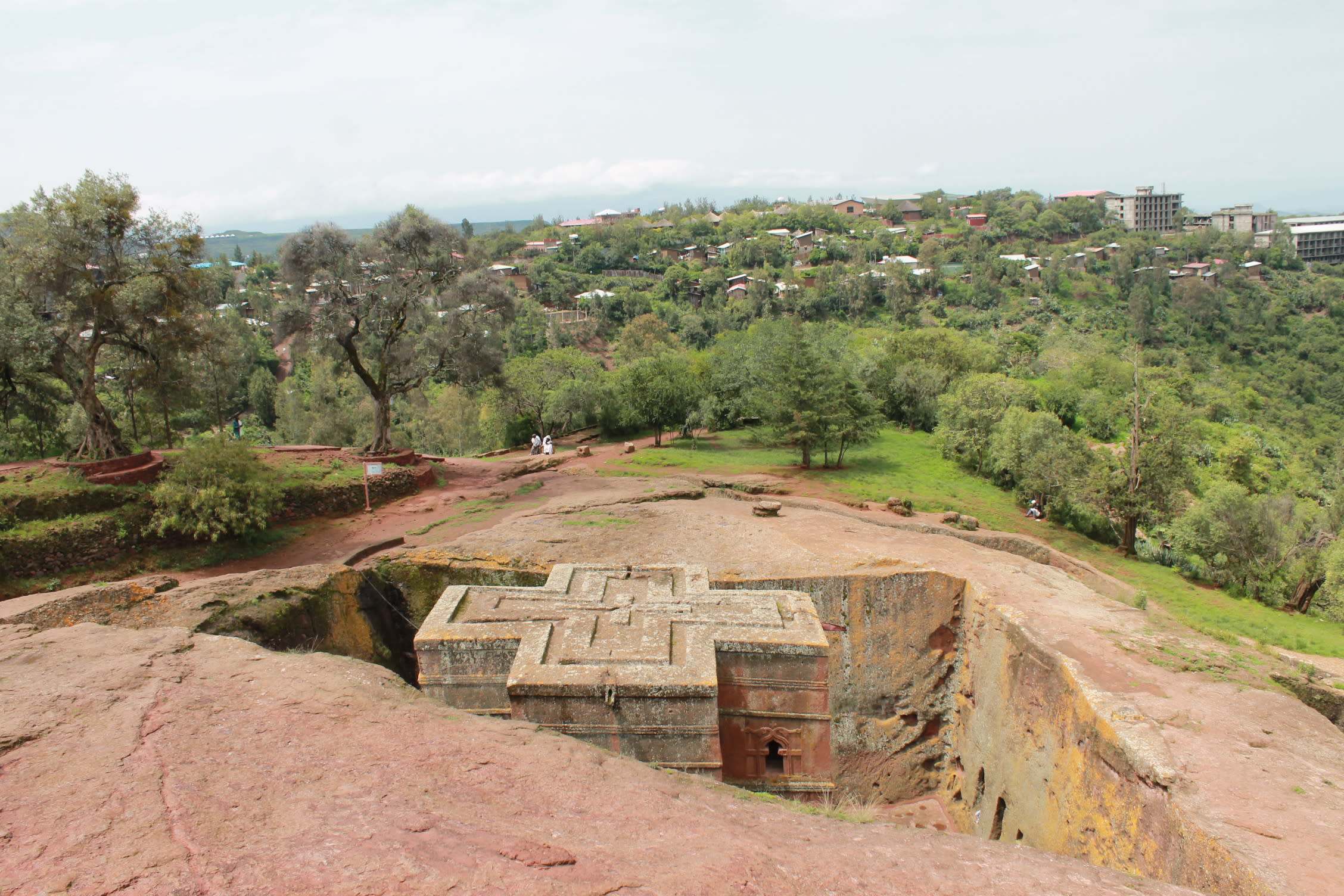
After breakfast, transfer to the airport for your flight with Ethiopian Airlines from Addis Ababa to Lalibela, Ethiopia’s famous highland town and one of the country’s greatest cultural treasures. Upon arrival, transfer to your hotel and enjoy lunch before beginning your afternoon exploration of the magnificent rock-hewn churches of Lalibela, a UNESCO World Heritage Site. Carved directly into volcanic rock more than 900 years ago, Lalibela’s churches represent one of the world’s most extraordinary architectural achievements. This remarkable complex features monolithic and semi-monolithic churches, hidden passageways, underground tunnels, beautifully carved details, and ancient religious paintings. Today, explore the first group of Lalibela’s churches, including Bete Medhane Alem, Bete Maryam, Bete Meskel, Bete Danagil, and Debre Sina with Golgotha. The visit concludes with the iconic Bete Giyorgis (St. George’s Church), the most famous of Lalibela’s churches, uniquely carved in the shape of a cross. Overnight: Top 12 Hotel, Lalibela.
Day 3
Lalibela – Harar
After breakfast, continue your exploration of Lalibela with a visit to the second group of rock-hewn churches, including Bete Amanuel, Bete Gabriel-Rufael, Bete Merkorios, and Aba Libanos. Discover the unique architectural styles, spiritual significance, and remarkable craftsmanship preserved within these ancient churches. After completing the church visit, transfer to Lalibela Airport for your flight back to Addis Ababa. Upon arrival, connect with your flight to Dire Dawa and continue by road to Harar, one of Ethiopia’s most fascinating historic cities. Known as the fourth holiest city in Islam after Mecca, Medina, and Jerusalem, Harar is a UNESCO World Heritage Site famous for its ancient walls, colorful traditions, and rich cultural heritage. In the evening, experience one of Harar’s most unique traditions by meeting the famous Hyena Men. Passed down through generations, this remarkable practice involves local caretakers feeding wild hyenas that come to the outskirts of the city each night. The tradition reflects the unusual relationship between the people of Harar and these wild animals, which has become one of the city’s most memorable cultural experiences. Overnight: Rawuda Harari Guest House, Harar.
Day 4
Back to Addis Ababa
After breakfast, explore the fascinating historic city of Harar, wandering through its lively streets, narrow labyrinthine alleys, and remarkable architectural heritage. Discover the unique atmosphere of Harar Jugol, a UNESCO World Heritage Site, with its ancient walls, colorful markets, and traditional homes. Visit some of the city’s more than 180 mosques and shrines, including historic sites dating back centuries. Admire the distinctive Harari houses, which reflect a fascinating blend of cultural influences from coastal Arabia, African traditions, and the wooden balcony architecture introduced by 19th-century Indian merchants. In the afternoon, depart Harar and travel back to Dire Dawa for your return flight to Addis Ababa. Overnight: Hayes Hotel, Addis Ababa.
Day 5
Addis Ababa – Semera – Dallol
Total Driving Distance: Approximately 300 km / 6 to 7 hours Wake up early in the morning and transfer to the airport for your flight to Semera, the gateway to the Danakil Depression. Upon arrival, enjoy breakfast in Semera before beginning your adventure into one of the most extraordinary landscapes on Earth. Drive through the dramatic scenery of the Danakil Depression to Lake Afdera, a stunning salt lake located in the heart of this unique region. Enjoy time to relax by the lake and, if conditions allow, take a swim in its mineral-rich waters. Continue the journey toward Hamed Ela, a small settlement near Dallol, passing through the otherworldly landscapes of the Danakil. In the late afternoon, visit Lake Assale to witness a spectacular sunset over the vast salt flats, creating an unforgettable desert experience. Spend the night in an open-air campsite in Hamed Ela, prepared with clean beds, mattresses, pillows, fresh bed sheets, and plenty of water to ensure comfort in this remote environment. Overnight: Camping, Hamed Ela.
Day 6
Dallol – Erta Ale
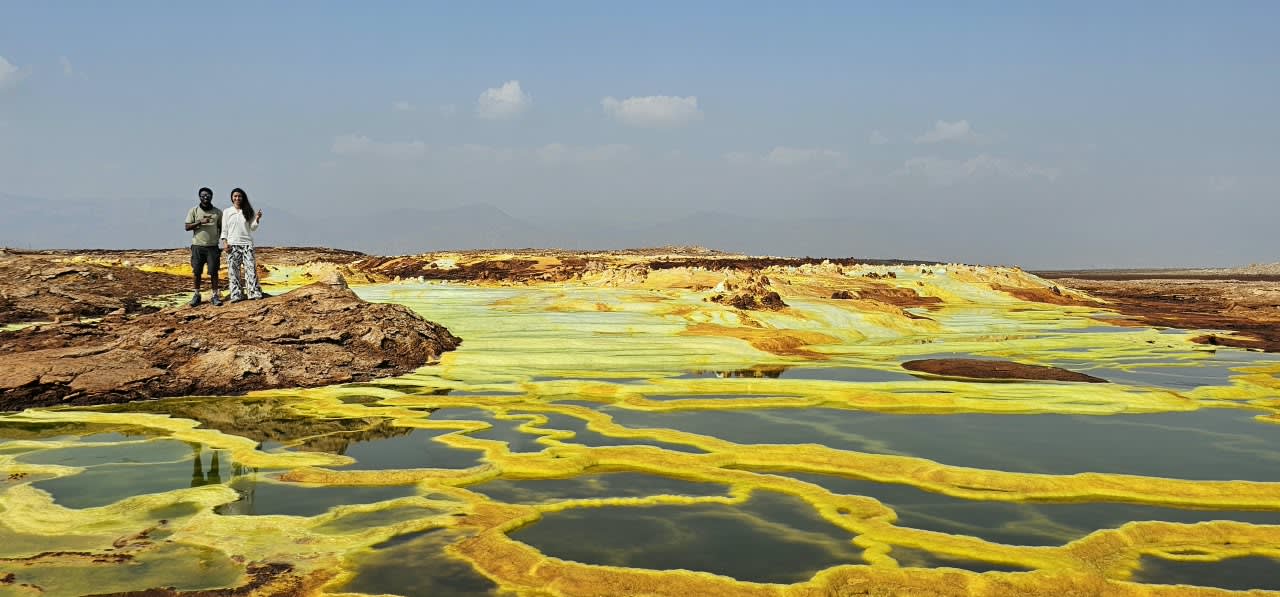
Total Driving Distance: Approximately 300 km / 6 to 7 hours Total Walking Distance: Approximately 3.5 hours Wake up before sunrise and begin your journey to the extraordinary Dallol geothermal area, one of the most unique landscapes on Earth. Explore this surreal volcanic environment where natural chemical reactions create a spectacular display of bright colors, mineral formations, and otherworldly scenery unlike anywhere else on the planet. Continue to explore the salt and mud formations beneath the Dallol crater, including a fascinating natural cave area formed by these unique geological processes. Enjoy a picnic breakfast nearby while taking in the incredible surroundings. Afterward, drive to the vast salt plains and visit Lake Karum (Lake Assale), where you can witness the traditional salt-mining activities of the Afar people. Experience the impressive process of extracting salt from the desert and, if conditions allow, enjoy a swim in the saltwater pools under the intense Danakil sun. Return to Hamed Ela for lunch and a short rest before continuing toward Erta Ale Volcano. Arrive at the camping area near the caldera and begin the trek to the summit. The walk takes approximately one hour to reach the crater area. Although the lava lake is currently inactive, the volcanic landscape and surrounding scenery remain an incredible natural wonder. Spend time at the summit before descending back to the campsite in the evening. The trek usually begins around 5:30 PM and returns around 8:00 PM, allowing you to experience the dramatic atmosphere of the volcano after sunset. Overnight in an open-air campsite on flat ground, equipped with comfortable mattresses, pillows, clean bed sheets, and a peaceful desert setting. Overnight: Camping, Dodom.
Day 7
Semera – Addis Ababa
Total Driving Distance: Approximately 270 km / 5 to 6 hours Wake up with the sunrise and enjoy breakfast before beginning your journey back through the dramatic landscapes of the Danakil Depression. Drive to Afdera Salt Lake Town, one of the main centers for salt production and distribution in the region. Located approximately 102 meters below sea level, Afdera is known for its extreme climate and important role in the traditional salt industry of the Afar people. Upon arrival, enjoy lunch in town and take time to explore the area, including views of Lake Afdera and a walk through the surrounding salt farms, where you can learn about the traditional methods of salt extraction. In the afternoon, continue driving to Semera Airport for your return flight to Addis Ababa. Upon arrival, transfer to your hotel and relax after your unforgettable Danakil Depression adventure. Overnight: Hayes Hotel, Addis Ababa.
Day 8
Addis Ababa – Arba Minch
After breakfast, transfer to the airport for your flight to Arba Minch. Upon arrival, check in to your hotel and enjoy lunch before beginning your afternoon exploration. Visit the Dorze village, located in the beautiful highlands above Arba Minch. The Dorze people are renowned for their traditional weaving skills, especially the production of Shamma, a beautifully crafted traditional Ethiopian cloth that remains an important part of their culture and livelihood. Explore their unique beehive-shaped houses, often said to resemble elephants, reflecting the connection between local traditions and the natural environment of the area. These impressive structures are built using bamboo and other local materials and demonstrate the Dorze people’s remarkable craftsmanship. Learn about their traditional lifestyle, including the importance of Enset (“false banana”), a staple food that plays a central role in the daily life and culture of the community. Overnight: Wubetie Hotel, Arba Minch.
Day 9
Drive to Turmi via Konso
After an early breakfast, begin your journey to Konso, a UNESCO World Heritage Site known for its remarkable landscapes, traditional culture, and impressive agricultural terraces. Explore the unique Konso communities, famous for their colorful traditional clothing, stone-walled villages, and generations of carefully constructed terraces that transform the dry basalt hills into productive farmland. The Konso are skilled agriculturalists, and their terracing system represents centuries of adaptation, knowledge, and sustainable land management. Discover the traditional villages surrounded by stone walls, generation poles that mark the age of each settlement, and the famous waka wooden statues used as grave markers to honor ancestors and important community members. Continue to Key Afer to experience the colorful Thursday Market, one of the most vibrant cultural gatherings in the Omo Valley. Here, you may meet people from different communities, including the Ari, Bena, Hamer, and Tsemay. Observe their traditional clothing, hairstyles, jewelry, and unique cultural expressions. The Bena and Hamer women are known for their distinctive red clay-coated braids decorated with butter and scented with incense, while Tsemay women wear traditional beaded skirts that reflect marital status. The men often display elaborate hairstyles decorated with feathers and colorful beads. After exploring the market, continue to Jinka, the gateway to the Omo Valley and a center for exploring the region’s diverse indigenous cultures. Overnight: Buska Lodge, Turmi.
Day 10
Turmi – Karo Village
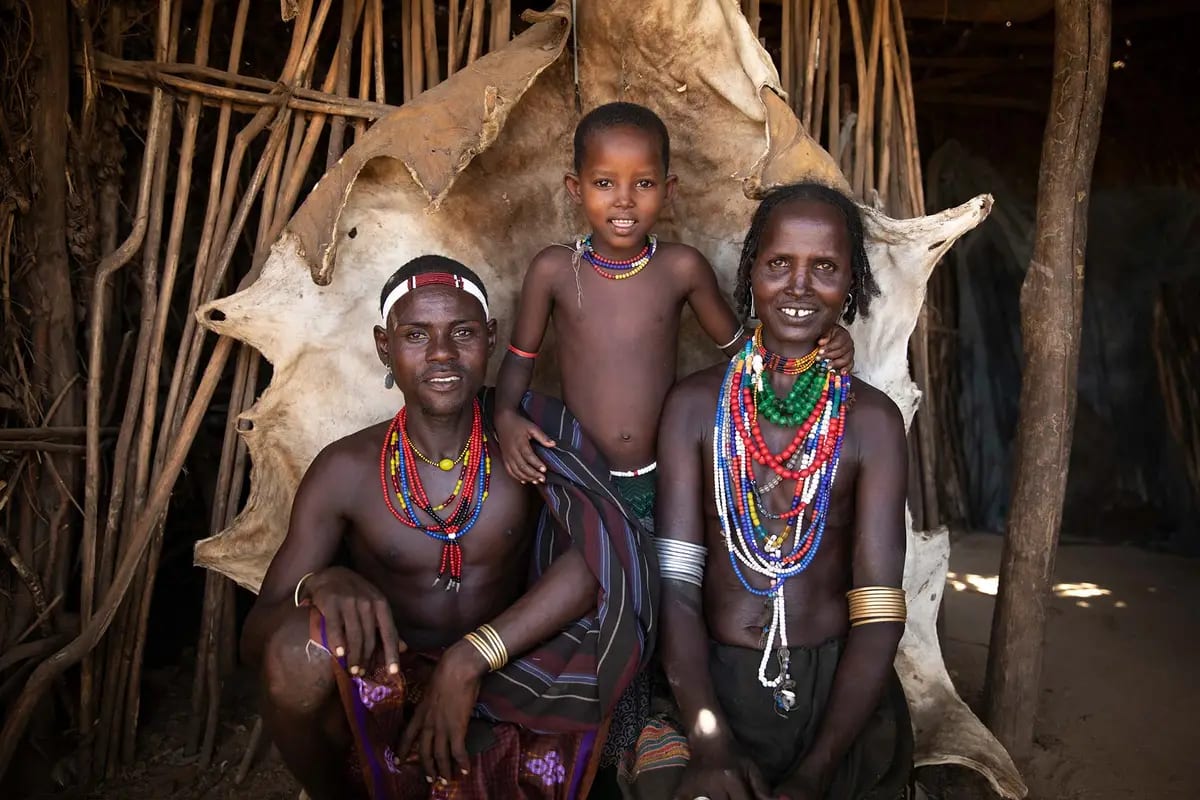
After breakfast, depart from your lodge and begin a full-day cultural excursion to visit the Karo people, one of the smallest ethnic groups in the Omo Valley, with a population of fewer than 2,000 people. Located along the banks of the Omo River, the Karo are an agro-pastoralist community who practice flood-retreat cultivation, growing crops such as maize, beans, and sorghum while also keeping small livestock. They are especially famous for their elaborate body painting, using white chalk as the main material, along with natural pigments made from local minerals, iron ore, and charcoal. You may also see traditional hair decoration using red clay mixed with butter. Learn about Karo traditions, including the symbolic scarification practiced by some men to represent a dangerous animal or enemy defeated. Enjoy the opportunity to interact with the community and experience their unique artistic expressions and way of life. In the late afternoon, visit a Hamer village, home to one of the most recognized communities of the Omo Valley. The Hamer people are known for their striking appearance, traditional hairstyles, body decorations, colorful beads, bracelets, and cultural ceremonies. Experience their traditional lifestyle and learn about the famous Evangadi (moonlight dance), a vibrant evening celebration of singing and dancing. The Hamer are also known for the bull-jumping ceremony, an important rite of passage marking the transition from childhood to adulthood, performed only on special occasions. Return to your lodge in Turmi after an unforgettable cultural experience. Overnight: Buska Lodge, Turmi.
Day 11
Turmi – Omorate – Jinka
After breakfast, drive to Omorate, located approximately 72 km from Turmi, to visit the Dassanech people living near the banks of the Omo River, close to the Ethiopian-Kenyan border. Cross the Omo River by local boat and explore a traditional Dassanech village. The Dassanech are traditionally pastoralists, although many communities have adapted to a more semi-nomadic way of life in recent years. Learn about their unique culture, daily activities, and traditional practices. The Dassanech are known for their distinctive body decorations, including the symbolic scarification worn by some men. These marks represent courage, bravery, and achievements, particularly among warriors who demonstrated strength during battles or cattle raids. After the village visit, return to Turmi for lunch and continue your journey to Jinka, the gateway to the Omo Valley’s diverse indigenous communities. Overnight: NASA Hotel, Jinka.
Day 12
Visit the Mursi Tribe and Fly to Addis Ababa
Begin your day with an early morning drive to the Mursi highlands, home to one of Ethiopia’s most famous and distinctive indigenous communities. Located in the remote landscapes of Mago National Park, the Mursi people are internationally known for their traditional lip plates worn by some women as a symbol of beauty, identity, and cultural pride. Spend time learning about Mursi traditions, daily life, and social customs. The community is also known for its warrior traditions, with symbolic scarification among some men representing courage, achievements, and historical battles. You may also observe their traditional hairstyles and unique cultural expressions. After the visit, return to Jinka for lunch and transfer to Jinka Airport for your flight back to Addis Ababa. Upon arrival in Addis Ababa, enjoy a memorable farewell cultural dinner featuring traditional Ethiopian cuisine, local drinks, music, and cultural performances. After dinner, transfer to Bole International Airport for your international departure, taking with you unforgettable memories of Ethiopia’s history, landscapes, and diverse cultures. ### What to Bring for the Danakil Depression Tour Light/flashlight (especially for night walking) Small backpack for the trek to the volcano summit Closed, comfortable walking shoes or trekking shoes Sun protection (sunscreen, sunglasses, and hat) Warm jacket for the night at the volcano Toilet paper (soft) Sleeping bag, pillow, or blanket (some camping equipment will be provided by the agency)
What Is Included
- Meet-and-assist at Bole International Airport and all transfers
- Domestic flights as shown in the itinerary
- 4x4 vehicles with experienced desert drivers
- Licensed English-speaking guide (other languages on request)
- 11 nights of accommodation: 4-Star Hotels and Eco-Lodges
- Full board: breakfast, lunch and dinner
- Afar regional permits, local Afar guide and police escort
- Camping equipment with mattresses, pillows and clean bedding
- Drinking water: around six litres per person per day
- Entrance fees to all sites and churches in the itinerary
Not Included
- International flights and Ethiopian visa
- Travel insurance (strongly recommended)
- Photography fees in Omo Valley villages (paid locally)
- Drinks, tips and personal expenses
Before You Book
Questions about this journey
How long is this tour?
When is the best time to take this tour?
Is it private, and can the itinerary be changed?
How much does it cost, and how do I book?
Guest reviews
What our guests say
Rated 5.0 on Tripadvisor and Google, and 4.9 on SafariBookings.
“My tour operator was very communicative even before the trip began and very responsive on WhatsApp. He booked all my domestic flights and arranged all my airport pick-ups and drop-offs. He had professional guides in all the regions I visited, the itinerary was clear, and he was flexible with any changes. There were no extra costs. He is reliable, communicative and well experienced. I will be back with the same company.”
Sarah · Kenya · August 2026
Read more reviews on SafariBookings“Excellent services provided by Maereg and his team. The local guides and the drivers – Geta (my fave) – were all great. They were patient, professional, knowledgeable and took great care of us. Everything was seamlessly coordinated and they were always on time for pickups and made sure we were briefed in advance of the itinerary and any changes. One of my top travel destinations in Africa, with some of the kindest and warmest people. Maereg went above and beyond! First-class service, always with a smile!”
D Thomas · Google review · May 2026
Read more reviews on GoogleEnquire
Make 12-Day Amazing Ethiopia yours
Send us your dates and we will confirm availability, quote precisely, and suggest the two or three changes we would make if it were our own trip.
Runs November to March · Private or group · A quote made for your journey
Let’s Plan Your Ethiopian Adventure
Tell us a little about your travel plans. We’ll help you create a journey that suits your interests.
Other Journeys
You may also be weighing up
Discover Ethiopia. Experience the Extraordinary!
Questions before you enquire?
Altitude, road time, how hard the walking really is, whether the children will cope. Ask us anything. Our team will answer honestly.
Or call us directly on +251 912 039405